
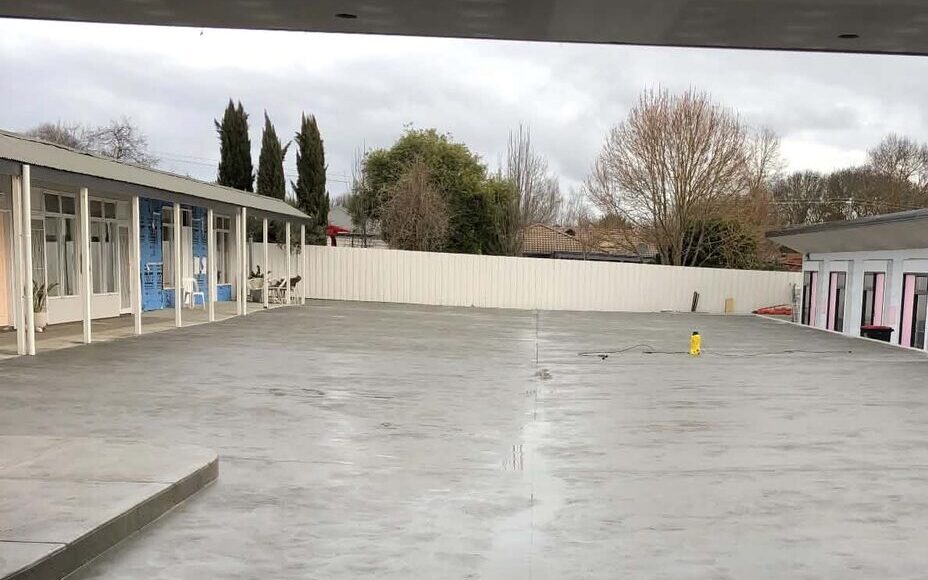
A concrete slab looks simple once it is down, but most of what makes a slab last happens before the concrete truck arrives. If you are planning a shed, an extension, a patio base or a garage floor, here is what to understand before anyone pours.
The slab has to match the job
A slab for a garden shed carries a different load to a garage slab with cars on it, and both are different again to a house extension slab, which is engineered work with the building permit to match. Tell the concreter exactly what is going on the slab, now and later. A slab poured light for a shed will not love a caravan parked on it next year.
Site preparation is most of the job
The ground gets levelled, soft spots come out, and a compacted crushed rock base goes down. Edges are formed up straight and square, plumbing or electrical conduits that need to pass through the slab are placed, and reinforcement mesh or bar is laid. In many Victorian soils, moisture movement in clay is the reason slabs crack, so the base and the reinforcement are not where to save money.
Vapour barriers and curing
A plastic membrane under the slab stops ground moisture pushing up through the concrete, which matters if anything is going on top of the slab later, like flooring or wall frames. After the pour, the slab needs to cure. Keeping it damp for the first days and keeping loads off it while it gains strength is what gives the concrete its full hardness.
What to ask before you book
Ask what base preparation is included, what thickness and reinforcement the price covers, whether a vapour barrier is included, and how long before the slab can take load. Get it in writing.
Ready for numbers? Send the slab job through with the size, what is going on it, and a photo of the spot. Our slabs service page has more detail on what the work involves.