
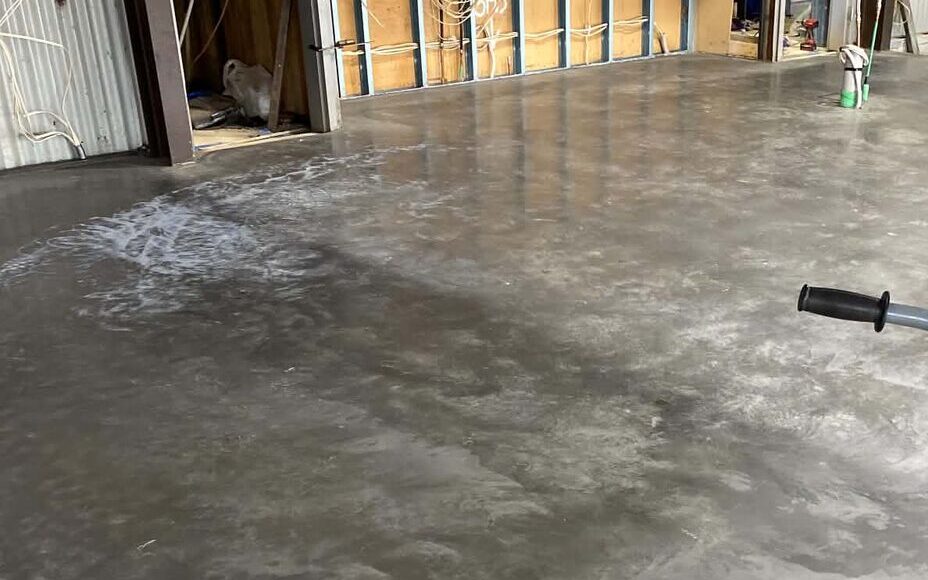
Burnished concrete is the smooth, satin-sheen floor you see in modern homes, cafes and shops. It starts as a normal slab, and while the concrete is still fresh, power trowels work the surface over and over until it closes up dense and smooth. The result is a floor with a soft lustre, not a wet gloss, and no coating to peel off later.
Why people choose it
One surface, no coverings. The slab is the floor. No tiles, no timber, no grout lines. That suits open-plan living areas, garages, studios and retail spaces.
Tough and low maintenance. A burnished floor handles foot traffic, furniture and the odd dropped tool. Regular dust mopping and an occasional damp mop is most of the upkeep.
It suits the slab you already have planned. Because the burnish is created at pour time, it is easiest on new slabs. Existing slabs can sometimes be ground and polished instead, which is a different process.
What to know first
The look depends on the pour. Colour variation, aggregate showing through, and trowel marks are part of the character. If you want perfectly uniform, say so early and talk through the options.
Slip resistance. A burnished finish is smoother than a broomed driveway, so it belongs indoors or under cover, not on an outdoor path that gets wet.
Timing matters. Burnishing happens in a tight window after the pour. The concreter plans the whole pour around it, so it needs to be agreed before the day, not on the day.
The burnished concrete service page explains the process, and the gallery has real photos of burnished floors from community jobs. To price one, send the job through.